Industrial Grommet Types and Common Applications
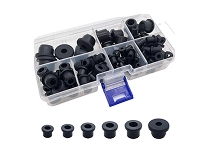
Industrial grommets reinforce openings in flexible or thin materials, helping protect edges and organize items routed through them. Common options include standard eyelets, closed grommets, open grommets, and multi-part styles with separate washers. Eyelets are often used for lighter-duty fastening, while a grommet-and-washer assembly can distribute pressure around an opening. Applications range from tarpaulins, covers, banners, and tents to machinery enclosures, electrical panels, ducting, and protective equipment. Some designs create a smooth passage for cables, hoses, or cords; others primarily strengthen a lacing or attachment point. When exploring industrial grommets on Ubuy, compare the intended application and assembly style before focusing on appearance alone. The right type should suit the material, expected handling, and exposure conditions of the finished product.
- Standard eyelets and washer-style grommets
- For fabric, sheet materials, covers, and enclosures
- Choose by use and fastening requirements
Grommet Materials, Finishes, and Environmental Conditions
Material choice affects corrosion resistance, strength, weight, and compatibility with the surface being reinforced. Brass grommets are valued for corrosion resistance and formability, while steel options can suit applications where strength is a priority; plated finishes may provide an added protective surface. Stainless steel is commonly considered for demanding environments where corrosion resistance matters. Plastic grommets are lightweight and can help protect cables or soften contact at an opening, but their load and temperature limits differ from metal designs. Finish, base material, and any coating should be assessed together, especially when a component will encounter moisture, cleaning agents, abrasion, or outdoor exposure. Also consider whether dissimilar metals could contact each other in service. Match the grommet to the surrounding material and operating conditions rather than selecting solely by color or price.
- Compare brass, steel, stainless steel, and plastic
- Check coating and corrosion resistance
- Consider temperature, moisture, and abrasion
Sizing, Hole Diameter, and Material Compatibility
A secure fit depends on more than the visible opening. Check the inside diameter for the cable, hose, cord, or attachment that must pass through, then verify the flange diameter provides enough coverage around the cut edge. The barrel length, or reach, must accommodate the combined thickness of the material and any washer while allowing the grommet to set correctly. Measure the material thickness and prepared hole carefully, using the product's stated dimensions rather than estimating from a photograph. Soft textiles, coated fabrics, leather, and thin sheet materials may behave differently during installation, so test the chosen size on representative material when practical. Avoid an opening so tight that it pinches routed items or one so large that the fitting cannot grip securely. Accurate measurements help prevent tearing, loose hardware, and installation rework.
- Match inside diameter to routed items
- Check flange diameter and barrel length
- Measure material thickness and hole size
Load, Edge Protection, and Performance Features
Industrial grommet performance depends on the assembly, substrate, installation quality, and forces applied in use. A reinforced opening can help limit fraying or deformation, but it should not be treated as a lifting point or structural fastener unless its specifications and the full assembly support that purpose. For cable pass-throughs, look for a smooth, burr-free edge that reduces rubbing; flexible grommets can provide cushioning where movement or vibration is expected. For covers and tensioned fabric, consider pull direction, repeated loading, spacing, and the strength of the surrounding material. Metal thickness, flange shape, and washer design influence how pressure is distributed. Review product dimensions and application guidance, and assess any stated load or temperature ratings against actual operating conditions. On Ubuy, compare these specifications across product listings to narrow options for the job.
- Assess the full assembly and substrate
- Use smooth edges to protect routed lines
- Check stated performance limits
Installation Tools, Accessories, and Maintenance
Many metal grommets require a matched setting die, anvil, or press, while some smaller eyelets can be installed with hand-setting tools. Confirm that the tool set matches the grommet style and size; mismatched dies can deform the flange or produce an unreliable crimp. Installation typically involves preparing a clean, correctly sized hole, placing the barrel through the material, positioning the washer where required, and setting the assembly evenly. Follow the tool maker's instructions and use appropriate eye protection when cutting or forming material. Keep spare washers and compatible cutting tools available for repeat work. Inspect installed fittings periodically for loosening, sharp edges, corrosion, or damage to the surrounding substrate, particularly on items that flex or move. Remove or replace worn parts before they compromise the material or interfere with cables and other routed components.
- Use compatible setting dies and presses
- Prepare clean, correctly sized openings
- Inspect for wear, corrosion, and sharp edges
Select the Right industrial grommets
Start with the job: identify the material, opening purpose, routed item or attachment, and expected exposure. Choose a grommet type and material suited to those conditions, then compare inside diameter, flange diameter, barrel length, and material thickness range. If the opening will see pulling, vibration, or repeated handling, evaluate the complete installation rather than relying on the fitting alone. Confirm whether a washer is included and whether you need a compatible punch, hand setter, or press die. For cable management, prioritize a suitable passage size and edge protection; for fabric covers, consider reinforcement and the direction of tension. Product descriptions and dimensions can help make comparisons, but consult technical guidance for critical applications. Ubuy provides a place to discover international industrial grommet products and related installation supplies. A measured, application-led choice can support a neat fit and dependable everyday use.
- Define material, exposure, and intended use
- Verify dimensions and compatible tooling
- Compare complete assemblies, not appearance alone